How to Choose a Home in Cyprus: A Buyer's Guide and Viewing Checklist (2026)

Автор: Nikitas Papadopoulos
Co-Founder and COO, SquareOne
4 мин чтения
Содержание
A home that looks right in photos can turn out wrong for daily life: too hot in August, too far from school, or tied up with title problems. Choosing well in Cyprus means looking past the finishes at the things that are hard to change once you've bought. This guide covers how to narrow down the area, how to choose between new-build and resale, what to look for in a layout, and what to check on every viewing.
Start with the brief
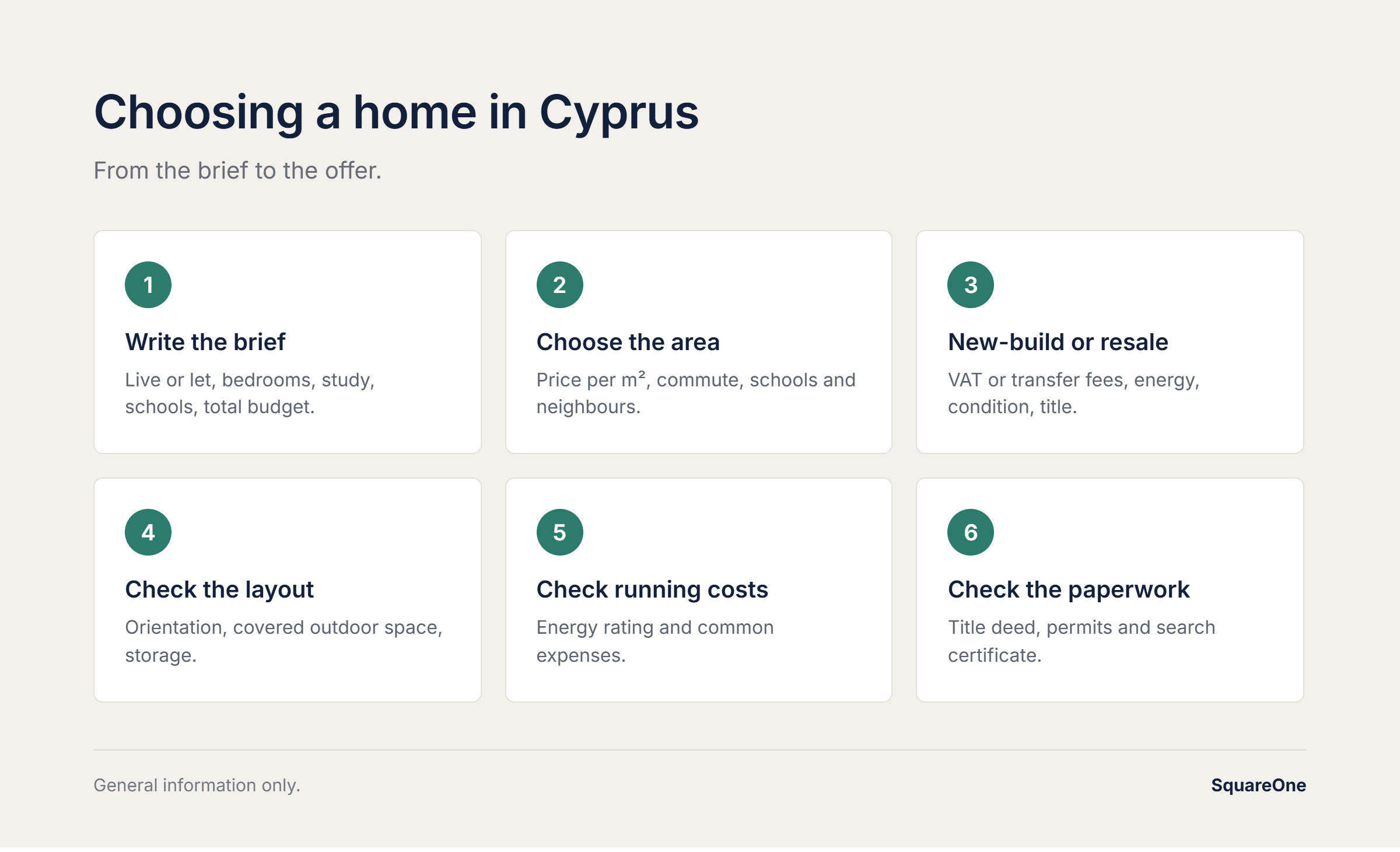
Before viewing anything, write down what the home has to do. Will you live in it or let it? How many bedrooms, and do you need a study? Do the schools, the commute or the beach matter most? What's the total budget, including VAT or transfer fees and legal fees? A clear brief stops you being swayed by a show flat that doesn't fit how you live.
Choose the area first
In Cyprus the area decides more than the building. It fixes the price per square metre, the commute, the schools in reach and who your neighbours and tenants will be. In Limassol, for example, central and eastern districts cost more than the west. See our guide to the best areas in Limassol, our Zakaki area guide and our guide to apartments in Paphos. If you're still choosing a city, how the Cyprus districts compare is a good starting point.
New-build or resale?
| New-build | Resale | |
|---|---|---|
| Purchase tax | VAT at 19%, or 5% on a qualifying main residence | Transfer fees, currently halved |
| Energy standard | Nearly-zero-energy rules for new buildings | Varies widely by age |
| Condition | New, with a developer's defects period | Check carefully, budget for updates |
| Title deed | Issued after completion and separation | May already exist; check for charges |
| Choice | Pick the floor, view and sometimes finishes | What you see is what you get |
Our off-plan vs ready guide goes deeper on buying before completion, and our VAT and transfer fees guides explain the taxes.
Layout and orientation
In a hot climate, the way a home is laid out matters as much as its size.
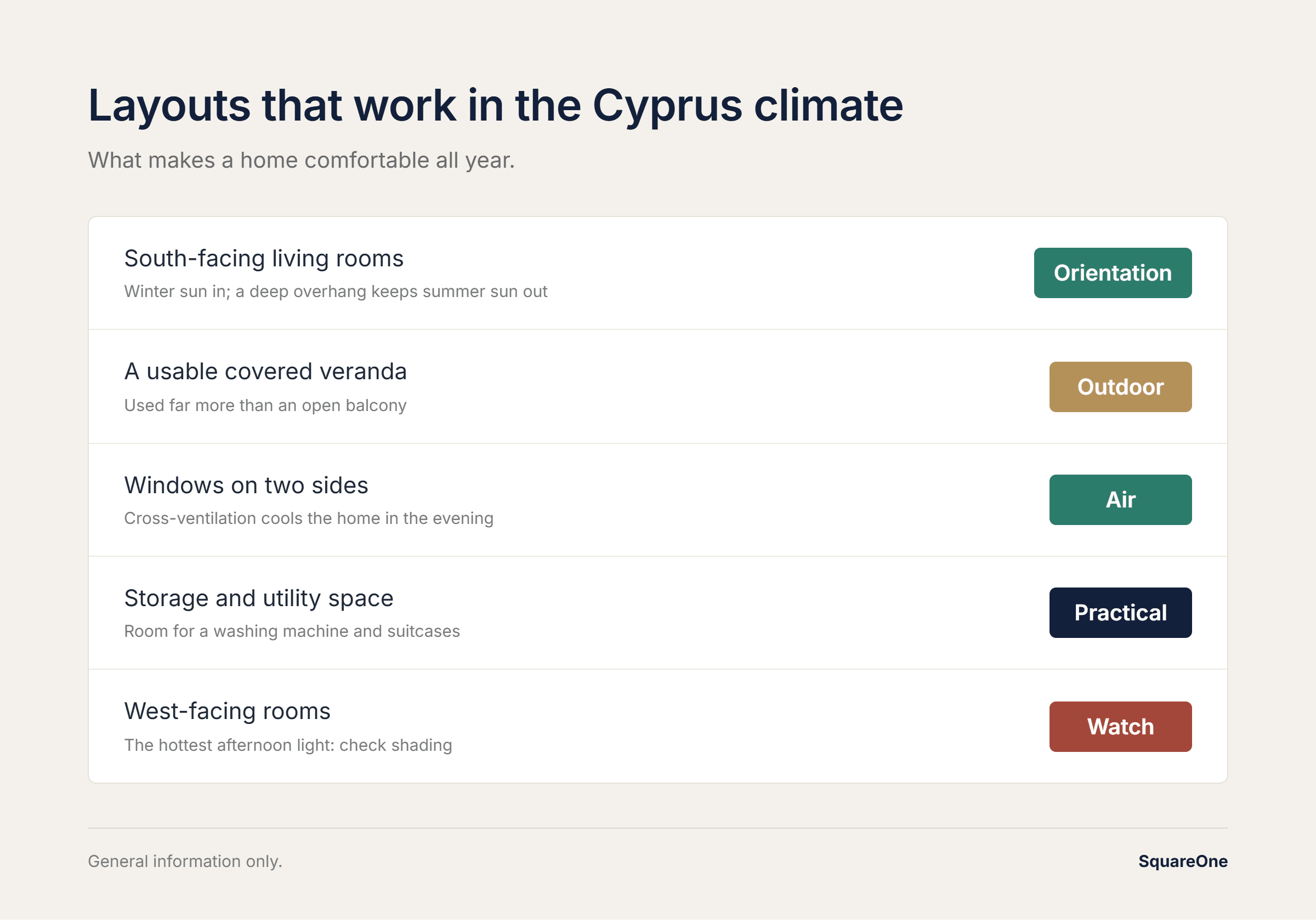
- Orientation. Living rooms and verandas facing south get winter sun, and a deep overhang keeps out the high summer sun. West-facing rooms get the hottest afternoon light.
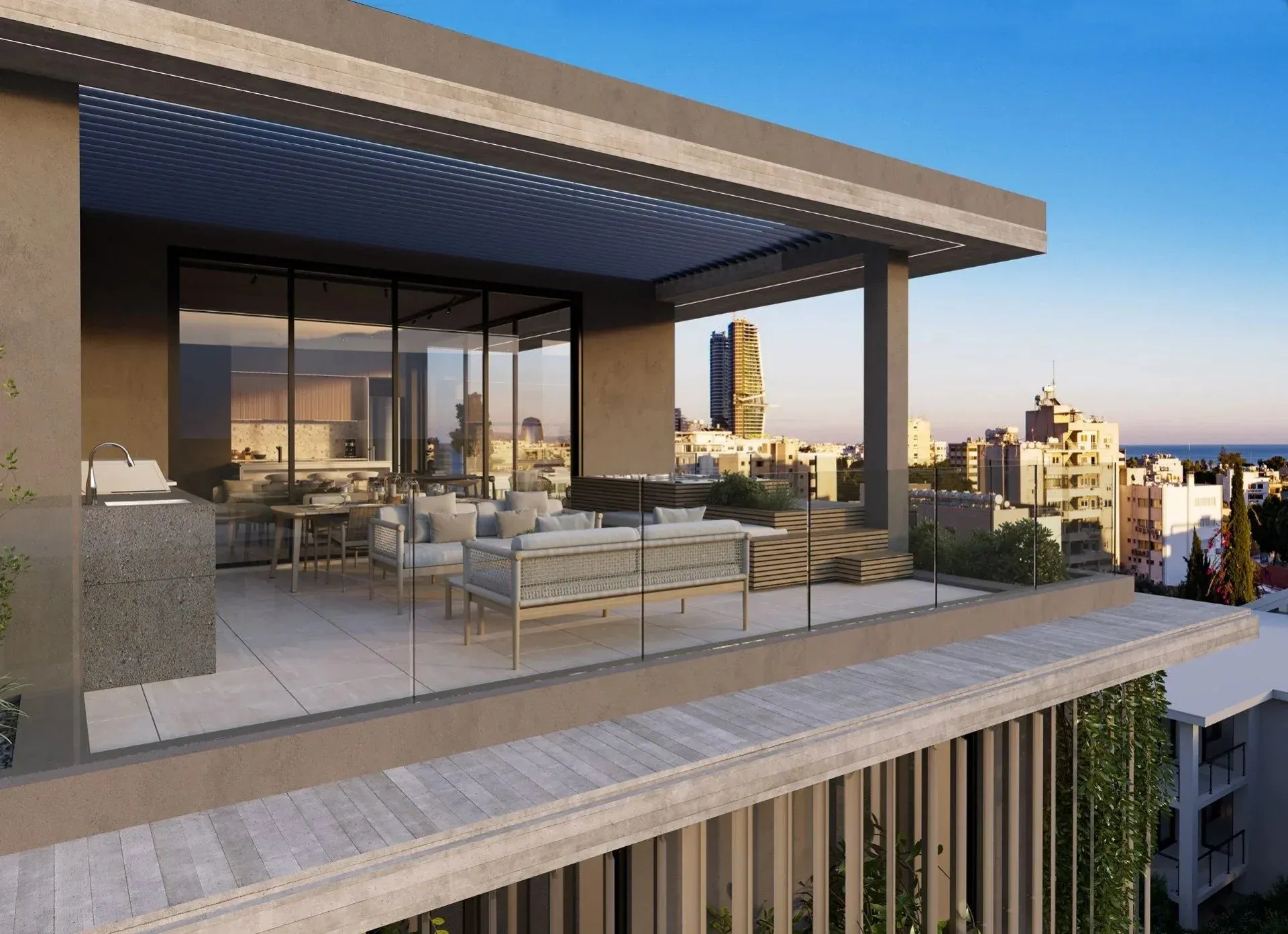
- Covered outdoor space. A covered veranda of a usable size is used far more than an open balcony.
- Cross-ventilation. Windows on two sides let the home cool naturally in the evenings.
- Storage and utility space. Space for a washing machine, cleaning things and suitcases is often missing in smaller apartments.
- Bedrooms. Check that every bedroom fits a bed and wardrobe comfortably, and whether the second bedroom works as a study.
If you're considering a top-floor unit, our penthouse guide covers the extra checks on roofs and heat.
Energy rating and running costs
Sellers and landlords in Cyprus must provide an Energy Performance Certificate, which has been required since 2010 and is valid for ten years. All new buildings have had to meet nearly-zero-energy standards since the end of 2020, with insulation, efficient glazing and renewable energy for part of their needs. A better rating means lower air-conditioning and heating bills, which in Cyprus mostly means summer cooling.
Also ask for the common expenses: what the building charges each month, what that covers (cleaning, lift, pool, garden, lighting), and whether there's a reserve for repairs.
Paperwork to check
- Title deed. Is there a separate title for the unit? If not, which permits does the development have? See how title deeds work in Cyprus.
- Search certificate. Shows any mortgages or court orders on the property.
- Permits. Planning permit, building permit and, for completed buildings, the certificate of final approval.
- Developer record. For new-builds, see how to choose a developer.
Foreign buyers should also read our step-by-step guide to buying as a foreigner.
A checklist for viewings
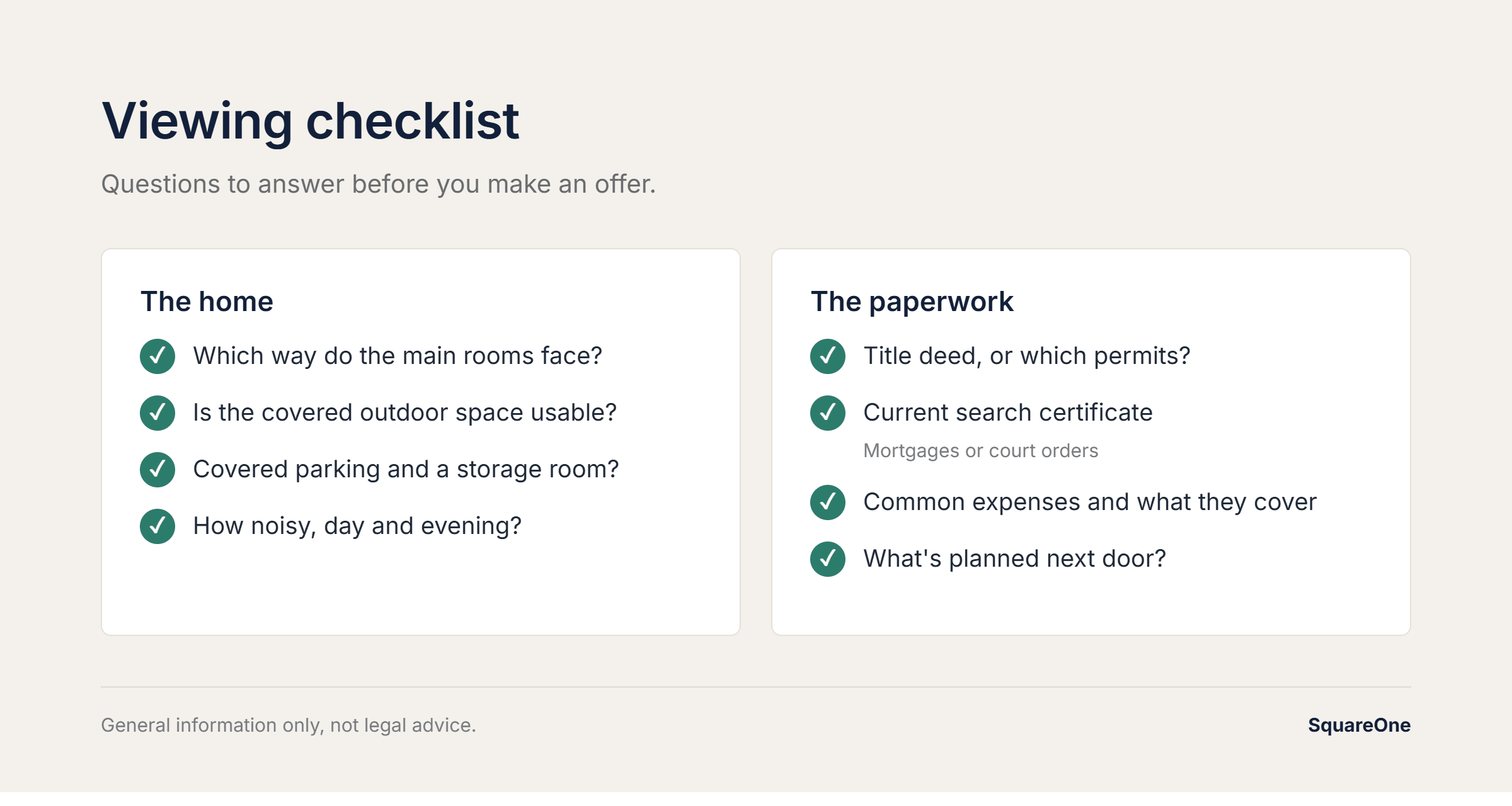
- Which way do the living room and veranda face, and how hot will they be in July?
- How big is the covered outdoor space, and is it usable for meals?
- Is there covered parking, and how many spaces come with the unit?
- Is there a storage room?
- How noisy is the street, day and evening?
- What's planned for the plot next door?
- What are the common expenses, and what do they cover?
- Is there a title deed, and are the permits in place?
For what the energy class on the EPC means in running costs, and the rules new builds must meet, see our guide to energy-efficient homes in Cyprus.
Choosing a SquareOne home
We design our apartments around how people live in Cyprus: orientation, covered verandas, storage and parking, as well as finishes. Browse our current projects or contact us to arrange a viewing.
General information only, not legal or tax advice.
Frequently asked questions
Is it better to buy a new-build or resale home in Cyprus?
It depends on your priorities. New-builds meet modern energy standards and let you choose the floor and view, but carry VAT. Resales carry transfer fees, may already have a title deed and can be bought and occupied straight away, but need a closer check on condition.
Which direction should a home face in Cyprus?
South-facing living rooms and verandas, with a deep overhang, get winter sun and less of the high summer sun. West-facing rooms get the hottest afternoon light.
Do homes in Cyprus need an energy certificate?
Yes. Sellers and landlords must provide an Energy Performance Certificate, valid for ten years. New buildings have had to meet nearly-zero-energy standards since the end of 2020.
What paperwork should I check before buying a home in Cyprus?
The title deed or the development's permits, a current search certificate showing any mortgages or court orders, and, for new-builds, the developer's track record. An independent lawyer should check all of these.
What are common expenses?
Monthly charges paid by each owner in a building to cover shared costs such as cleaning, lifts, lighting, gardens and pools. Ask for the current figure and what it covers before you buy.
Обновлено
Об авторе

Co-Founder and COO, SquareOne
Nikitas Papadopoulos is Co-Founder and COO of SquareOne. A Master of Architecture graduate of the Architectural Association in London, he leads how SquareOne's vision becomes built homes, from design through project delivery to everyday life in them.
- Master of Architecture, Architectural Association, London
- Design and project delivery